AARON COPLAND (1900–1990)
Clarinet Concerto (1947–1949)
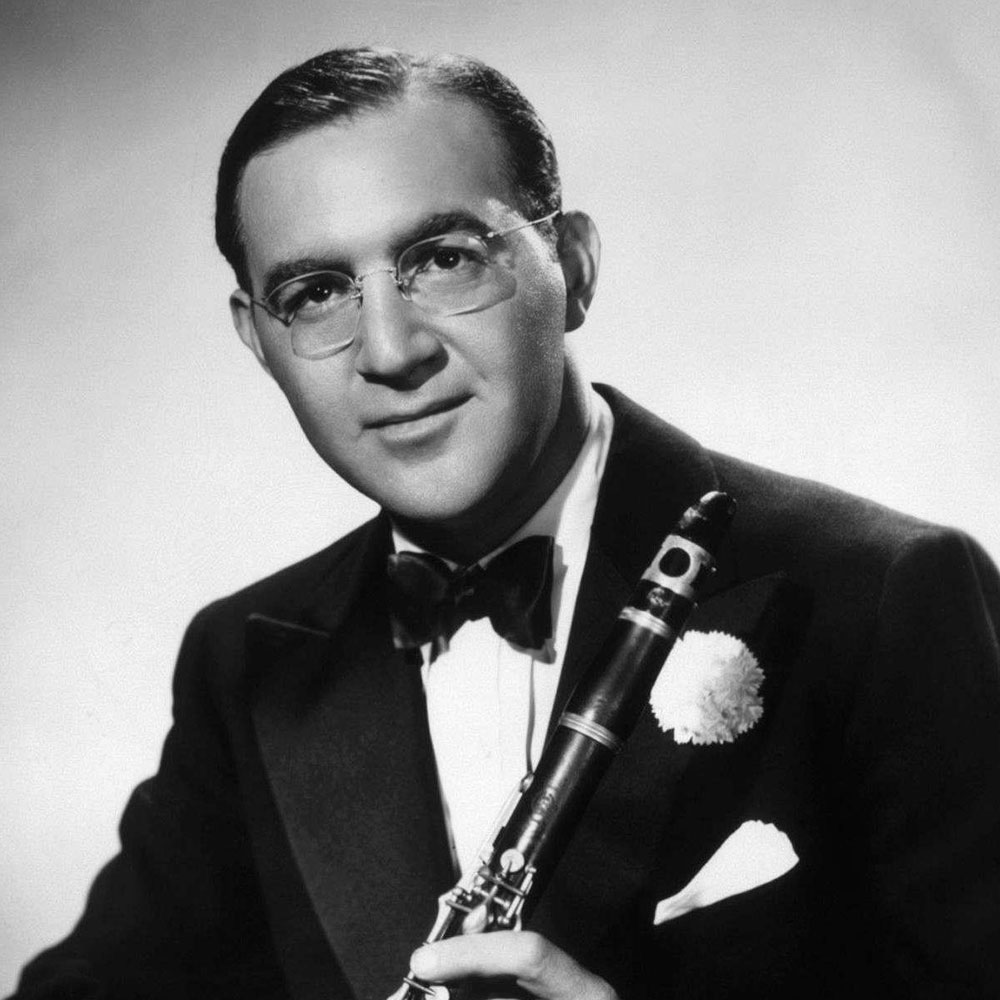
Commissioned by jazz clarinetist Benny Goodman, the concerto grew from Goodman’s interest in expanding the instrument’s concert repertoire. Copland and Goodman worked together on the solo part, with Goodman suggesting revisions to some of its technically demanding passages.
Copland’s travels in Latin America influenced the music, particularly its rhythmic character. The concerto brings together his concert-music language with jazz-inflected rhythms and gestures, culminating in the famous clarinet glissando at the end. Goodman gave the first performance in an NBC radio broadcast with Fritz Reiner conducting. While the work’s early critical reception was mixed, it later entered the standard clarinet repertoire, with notable performances by artists including Stanley Drucker, Richard Stoltzman, and Sabine Meyer.
ERNEST BLOCH (1880–1959)
Concerto Grosso No. 1 (1925)
Bloch wrote this work as an answer to his composition students, who questioned whether traditional forms and tonality still belonged in modern music. Scored for the Cleveland Institute’s student orchestra with piano obbligato, it uses the Baroque concerto grosso as a framework for distinctly twentieth-century harmony and rhythm. Bloch conducted the 1925 premiere; within a year, Serge Koussevitzky led the New York premiere with the Boston Symphony at Carnegie Hall, taking it beyond an academic exercise.
GEORGE GERSHWIN (1898–1937)
Lullaby (~1919–1920)
Written while Gershwin was studying composition with Edward Kilenyi, this single-movement string quartet began as a harmony exercise and was among his earliest attempts to work outside popular song. Gershwin later reused its melody in the opera, Blue Monday, but the manuscript remained unpublished for decades until Larry Adler performed his arrangement for harmonica and string quartet at the 1963 Edinburgh Festival. The original quartet received its first public performance in 1967, by the Juilliard String Quartet at the Library of Congress.
WILL HUDSON (1908–1981)
IRVING MILLS (1894–1985)
EDDIE DELANGE (1904–1949)
Arr. TEMUR YAKUBOV
Moonglow (1933)
Written as a theme song for Will Hudson’s band at Detroit’s Graystone Ballroom, “Moonglow” began as an instrumental before Eddie DeLange added lyrics. Benny Goodman’s 1934 recording turned it into a hit, and his 1936 quartet recording—with Teddy Wilson, Gene Krupa, and Lionel Hampton—became a landmark of early integrated jazz. The jazz standard reached a new audience through the 1955 film Picnic, where it was combined with the film’s theme.
DUKE ELLINGTON (1899–1974)
It Don’t Mean A Thing (If It Ain’t Got That Swing) (1931)
“It Don’t Mean a Thing” captures a moment when the word “swing” was becoming central to American popular music. Ellington later said the phrase was already circulating among jazz musicians, though its precise origin is uncertain. Ivie Anderson’s 1932 recording with Ellington’s orchestra—her first with the band—reached No. 6 on the charts. The song soon became a jazz standard, recorded by artists from Lionel Hampton and Dizzy Gillespie to Thelonious Monk and the Modern Jazz Quartet. Ellington’s original recording was inducted into the Grammy Hall of Fame in 2008.