JOHANN SEBASTIAN BACH (1685–1750)
Toccata and Fugue in D Minor (1708)
Beginning with one of the most recognizable openings in classical music, the Toccata unfolds into a series of dramatic, fast-moving passages and interwoven musical lines that showcase the power and range of the pipe organ. Leopold Stokowski’s 1927 orchestration* accompanies the abstract opening sequence of Disney’s original 1940 Fantasia—as live-action shots of the orchestra fade into animated lines, shapes and cloud formations which reflect the sound and rhythms of the music. (*While Stokowski’s version is iconic, tonight’s performance of the original Bach showcases W.K. Kellogg Auditorium’s 1933 Ernest M. Skinner organ, one of the best-preserved examples of Skinner's orchestral organ design. With more than 4,600 pipes, 56 stops, and a four-manual console, it was built to reproduce the colors and dynamics of a symphony orchestra with the power of a traditional pipe organ.)
PIOTR ILYICH TCHAIKOVSKY (1840–1893)
Trepak (Russian Dance) from Nutcracker: Suite No. 1 (1892)
One of several movements excerpted from the iconic ballet for an animated sequence in Fantasia based on the changing seasons, Trepak is a fitting backdrop for dancing thistles and flowers.
IGOR STRAVINSKY (1882–1971)
The Firebird: Suite (1919)
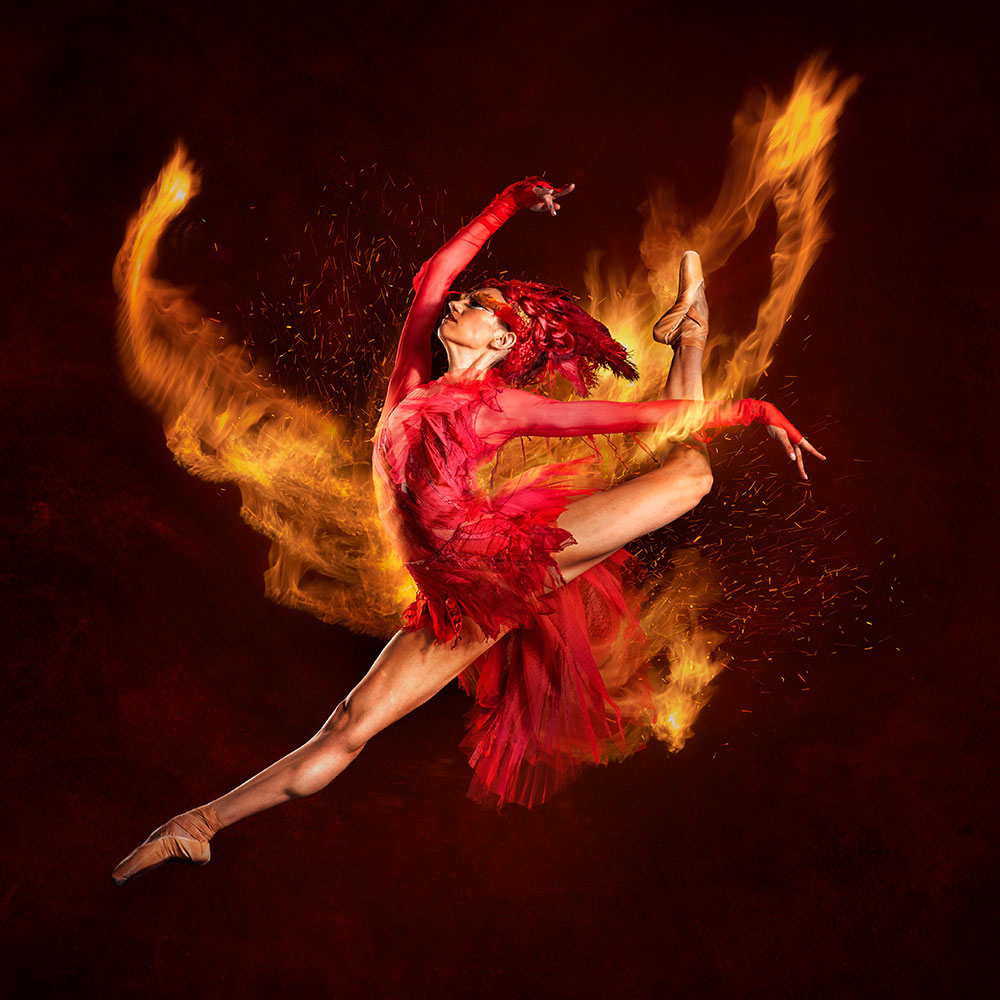
The Firebird is based on Russian folklore and tells the story of Prince Ivan, who captures the magical Firebird and releases her in exchange for one of her feathers. The feather later helps him defeat the sorcerer Kashchei, free those under his spell, and marry Princess Tsarevna. Stravinsky’s 1919 suite, which adapted material from the full ballet for concert performance, is used in Fantasia 2000 to accompany a different story depicting the cycle of destruction and renewal in nature.
AMILCARE PONCHIELLI (1834–1886)
Dance of the Hours from La Gioconda (1876)
A short ballet from Act III of the opera, La Gioconda, Dance of the Hours became an international hit in the concert repertoire after it was performed at the Paris Exhibition of 1878. The music was used in the original Fantasia in a segment of the complete ballet comically performed by animals: Ostriches, hippos, bubble-blowing elephants, and a troop of alligators present a grand finale so extravagant that they literally bring the house down.
OTTORINO RESPIGHI (1879–1936)
Pines of Rome (1924)
Each symphonic poem in Respighi’s Roman Trilogy—Fountains of Rome (1916), Pines of Rome (1924), and Roman Festivals (1928)—portrays scenes and impressions connected to the city of Rome. The final movement of Pines of Rome— "The Pines of the Appian Way”—is the backdrop a Fantasia 2000 segment telling the story of a family of humpback whales: In a frozen Arctic landscape, a young whale becomes separated from its parents and is trapped in an iceberg before following their shadows through the ice to be reunited with them. Following the music's expanding sense of motion and scale, the trio rises above the ice and clouds, joining a pod of whales soaring through space.